
Mullein leaf benefits: There are moments when breathing feels different. It is not painful, and it is not alarming. It just feels a little restricted. Your chest feels tight, or your breath feels shallow, and it is easy to ignore.
Many people look to herbs for comfort at times like these. Mullein leaf is one of the oldest traditional choices. In this guide, you will learn what mullein leaf benefits tradition describes, what the research really shows, and how to use it safely.
When Your Chest Feels Heavy, Listen Closely
First, an important point. Chest tightness or shallow breathing deserves attention. Many things can cause it. A cold, allergies, asthma, anxiety, and heart problems can all play a part.
Because the causes vary, do not assume a herb will fix it. If tightness or breathlessness is new, lasting, or getting worse, speak with a doctor. If you have sudden shortness of breath or chest pain, seek emergency help right away.
Why Mullein Has Been Trusted for Generations
Mullein is not new. People across Europe and beyond have used its leaves and flowers for centuries. Traditional healers most often turned to it for throat and chest discomfort. They brewed the leaves into teas, and they passed that knowledge down through families.
Even today, mullein remains popular. Its soft, velvety leaves and tall yellow flower spikes make it easy to recognize. Its long history explains much of its appeal.
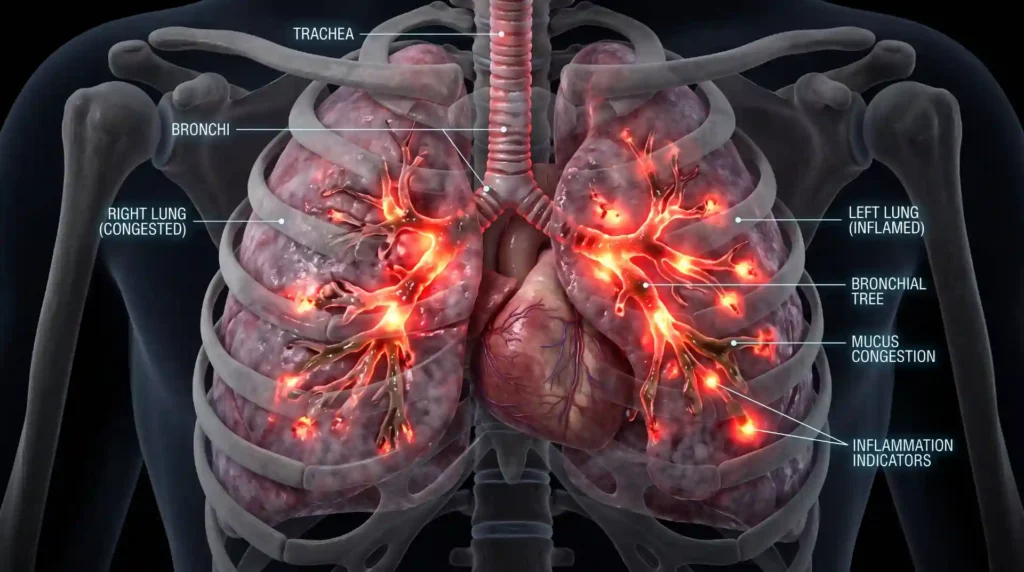
Mullein Leaf Benefits: What Is in Mullein Leaf
Mullein leaf contains several natural compounds. For example, mucilage is a gel-like fiber that coats the throat when you drink the tea. Additionally, saponins are plant compounds that some traditions associate with loosening mucus. Meanwhile, flavonoids and iridoids are plant compounds that researchers study for their antioxidant and anti-inflammatory activity.
However, it is important to interpret these findings carefully. These effects have been observed mainly in laboratory studies. In other words, a compound that works in a test tube does not always produce the same effect in the human body. Therefore, these ingredients help explain why researchers are interested in mullein. Nevertheless, their presence does not prove that mullein tea improves breathing.
What the Evidence Says About Mullein Leaf Benefits
Let us look at the evidence plainly.
The European Medicines Agency’s herbal committee has reviewed mullein flower. It accepted its traditional use for relief of sore throat associated with dry cough and colds. However, that conclusion rests on long-standing use and plausibility. The committee also noted a lack of clinical studies.
Independent reviews agree. Mullein contains compounds that plausibly soothe an irritated throat. Yet no published human trial has tested mullein tea for cough, mucus, or lung function. Because of this, the realistic mullein leaf benefits are modest: a warm, soothing drink with a long tradition behind it.
Does Mullein Cleanse the Lungs?
You may see claims that mullein cleanses or detoxes the lungs. The evidence does not support them.
Your lungs already clean themselves. Tiny hair-like structures in your airways move mucus and trapped particles upward, so you can cough or swallow them. This system works around the clock. No tea has been shown to improve it.
Also, swallowed tea travels to your stomach, not directly into your lungs. So, a cup of mullein tea cannot literally pull mucus out of the lungs.
Mullein Leaf Benefits: Never Smoke Mullein
Some websites suggest smoking mullein leaf as a lung cleanse. Please avoid this. Smoking any plant material irritates the airways and exposes your lungs to harmful particles. It can make breathing problems worse.
If you smoke tobacco and want to protect your lungs, the most effective step is to quit. A doctor or a local quit-smoking service can offer real support. No herb can undo the harm of smoking.
How Stress and Modern Living Affect Breathing
Your lungs face a lot every day. Air pollution, dust, smoke, and indoor fumes can all irritate your airways. Stress can also change how you breathe, since many people breathe faster and more shallowly when tense.
You can help in practical ways. Open windows to let fresh air in. Avoid smoke and strong fumes. Keep dust under control at home. Practice slow breathing for a few minutes each day. Breathe in gently through your nose, and let your breath out slowly. This simple habit can ease tension, and it costs nothing.
Mullein Leaf Benefits: Ways to Use Mullein Leaf Safely
The most common way to use mullein leaf is as a tea.
Place one to two teaspoons of dried mullein leaf in a cup. Pour about one cup of freshly boiled water over it, and cover the cup. Steep for ten to fifteen minutes. Then, strain the tea very carefully. Mullein leaves are covered in fine hairs that can irritate the throat, so use a paper coffee filter or a few layers of cheesecloth. Sip the tea warm. Add honey or lemon if you like.
Use only the leaves or flowers. Mullein seeds contain a natural toxin and should never go into tea.
What Regular Use Can and Cannot Do
A warm cup of mullein tea can become a calming daily ritual. Many people enjoy the slow, quiet pause. That alone can feel comforting, especially during dry or cold weather.
However, regular use will not clear your lungs. It also has not been shown to improve breathing or protect lung health in the long term. Enjoy it for what it genuinely offers: a soothing, traditional drink that suits a gentle routine.
Mullein Leaf Benefits: Safety Notes
Mullein tea is generally well tolerated when prepared properly. Even so, a few points matter.
Stop drinking it if you notice a rash, an itchy mouth, or any unusual reaction. If you are pregnant, breastfeeding, or taking regular medication, check with a doctor first. Check with a doctor before giving any herbal tea to a child. Be careful about where your mullein comes from. Wild mullein often grows beside roads, where it can pick up pollution. A trusted, tested source is a safer choice.
If you have asthma or another long-term lung condition, keep taking your prescribed medicines. Never replace them with herbal tea.

When to See a Doctor
See a doctor if you have a cough that lasts more than three weeks, wheezing, or shortness of breath. Also seek help for coughing up blood, a fever, or tightness that keeps coming back. Seek emergency help right away for sudden breathlessness or chest pain.
Do not rely on herbal tea for a serious or persistent problem. A proper diagnosis helps you get the right treatment.
Care for Your Lungs, Gently
Breathing is essential, and it often goes unnoticed until it feels difficult. Caring for your lungs starts with simple habits: clean air, no smoking, regular movement, and medical care when you need it.
Mullein tea can be one pleasant part of a calm routine. It is a traditional comfort, not a cleanse or a cure. Ready to try it? Explore Canny Herbs mullein tea, and brew a warm, well-strained cup this evening.