
Discover the forgotten history of mullein tea. Trace its journey from ancient Greek scrolls to modern kitchens across continents.
The Forgotten History of Mullein Tea
History of mullein tea: Long before modern tea shelves existed, mullein grew quietly along rocky paths and open fields. Yet, its presence was anything but ordinary. The history of mullein tea can be traced back thousands of years, when ancient civilizations valued plants not just for survival, but for tradition, ritual, and storytelling.
In ancient Greece, herbalists carefully documented plants like mullein in handwritten scrolls. They believed every leaf carried meaning, and mullein – with its tall stalk and soft, velvety leaves – stood out immediately. As a result, it became a recognizable symbol in early herbal practice, long before anyone thought to steep it in a cup.
Over time, knowledge spread gradually. Travelers and healers passed these traditions from one region to another, and because of this, mullein didn’t remain confined to one place. Instead, it began its quiet journey across continents, a journey that eventually shaped how we drink mullein tea today.
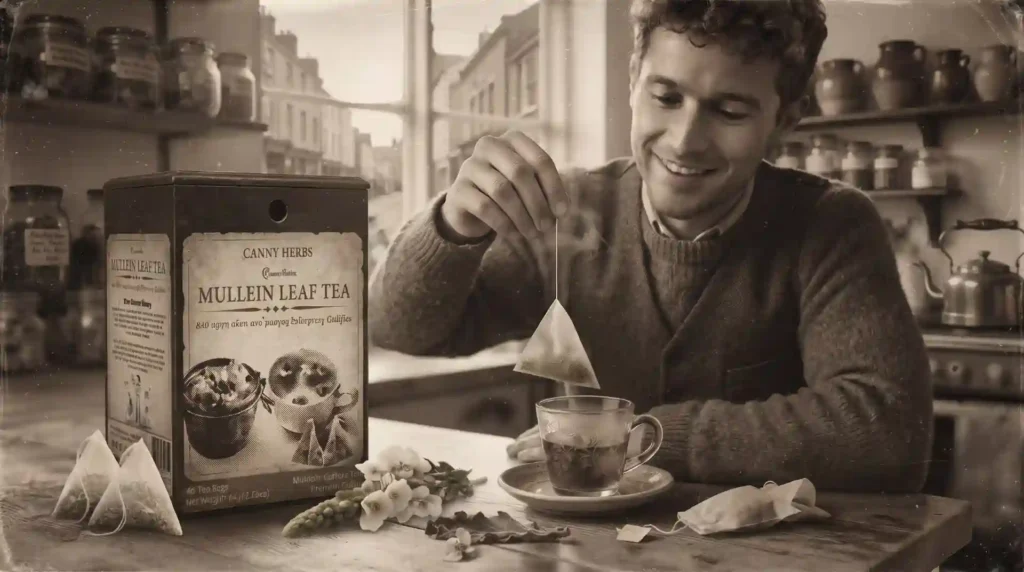
History Of Mullein Tea: From Europe to the New World
As centuries passed, the history of mullein tea expanded well beyond Europe. When settlers journeyed to North America, they brought familiar plants along, and mullein was one of them.
Interestingly, mullein adapted quickly to its new environment. It thrived in open lands, along roadsides, and across plains. Because it grew so easily, it soon became part of everyday life for many early communities, requiring little more than sunlight and neglect to flourish.
Pioneers often dried mullein leaves during long journeys, which made the plant easier to store and use later on. Consequently, mullein tea became something practical, simple, and accessible – not a luxury, just nature, preserved for whenever it was needed.
Why Mullein Traveled So Far
History of mullein tea: The journey of mullein was not accidental. Several qualities explain why this particular plant managed to spread so widely, while so many others stayed confined to their region of origin:
- Resilience – It grows in tough environments with little care or attention
- Accessibility – Found easily in the wild, without the need for cultivation
- Tradition – Passed down through generations, often as spoken knowledge rather than written record
- Versatility – Used in various simple herbal preparations, from teas to poultices
Because of these qualities, mullein became more than just a plant that happened to be useful. It became a shared experience across cultures, connecting people who never met and never spoke the same language, yet relied on the same tall, fuzzy-leafed herb.
Notably, mullein’s reach extended well beyond Europe and North America. Traditional Chinese medicine also drew on the plant’s respiratory benefits, using it to ease bronchitis and congestion in much the same way European herbalists did – despite the two traditions developing largely in isolation from one another. This kind of independent convergence, where different cultures arrive at similar uses for the same plant without ever comparing notes, is part of what makes mullein’s story so remarkable.
A Legacy That Still Lives On
History of mullein tea: Today, the history of mullein tea is no longer forgotten – it’s being rediscovered. People are becoming increasingly curious about where their teas come from, and understandably so. They want stories, not just products, and mullein offers exactly that.
Its journey – from ancient scrolls to open plains – connects the past with the present in a way few other herbs manage. Every cup reflects centuries of movement, adaptation, and tradition, even if the person drinking it has never heard the full story before.
Interestingly, this renewed interest hasn’t come out of nowhere. Search interest around mullein has grown sharply in recent years, driven in part by a broader shift toward natural, traditional remedies. In other words, the plant’s ancient reputation is finally catching up with modern curiosity.

Bringing History Into Your Cup
History of mullein tea: Drinking mullein tea today is not just about the moment. It’s about continuity – about experiencing something that has traveled through time to reach you, largely unchanged in form even as the world around it transformed completely.
Unlike many modern blends engineered for flavor or marketing appeal, mullein tea carries a genuine sense of simplicity. There’s no complexity, no noise, no elaborate backstory manufactured for a label. Just a quiet connection to nature and history that predates almost every other wellness trend on the shelf.
The history of mullein tea reminds us that the simplest things often have the richest stories. From ancient herbalists documenting its properties on scrolls, to wandering pioneers drying its leaves for long journeys, this plant has crossed borders, climates, and centuries with remarkable consistency.
How Mullein Earned Its Place in Herbal Tradition
History of mullein tea: It’s worth pausing to consider why, specifically, mullein earned such lasting trust across so many different cultures. Unlike plants that required careful cultivation or specific growing conditions, mullein essentially thrived on neglect. It grew where other plants struggled – along roadsides, in disturbed soil, in the margins of fields – which meant it was almost always within reach.
This accessibility mattered enormously in eras before global trade made rare botanicals available to everyone. A healer in rural Europe and a settler in the American plains could both rely on the same plant, prepared in remarkably similar ways, without ever comparing notes. That kind of independent, parallel adoption is part of what makes mullein’s story so compelling: it wasn’t spread by a single trade route or a single influential text. It simply worked, repeatedly, in enough different places that its reputation built itself.
There’s also a practical reason mullein’s tradition survived so cleanly across generations: it’s simple enough to pass down without formal instruction. Unlike remedies requiring precise measurements or rare ingredients, mullein tea only ever needed leaves, water, and time – which meant the knowledge could travel by word of mouth, from parent to child or neighbor to neighbor, without losing much in translation.
Why the Story Matters Today
In a market full of teas designed primarily to look appealing on a shelf, mullein tea stands out precisely because it wasn’t designed at all. It was discovered, tested over generations, and passed along because it earned its place – not because a marketing team decided it should.
That distinction matters more to today’s tea drinkers than it might have a decade ago. As more people look past flashy packaging toward ingredients with real substance behind them, plants with a documented, centuries-long history offer something harder to manufacture: authenticity that doesn’t need to be claimed, because it’s simply true.
And Now, It’s Here
Every time you brew a cup of mullein tea, you’re participating in something considerably older than your kettle, your kitchen, or even your country. From ancient Greek scrolls to open American plains, this plant has quietly earned its place in herbal history – and now, it’s ready to be part of your daily routine, too.