
Discover mullein tea benefits rooted in centuries of herbal tradition, from ancient healers to today’s natural wellness routines.
Mullein tea have captured attention for centuries. This humble plant, with its tall flower spikes and soft, fuzzy leaves, holds a genuinely remarkable story. From ancient healers to modern wellness seekers, interest in mullein tea benefits continues to grow. Here is a look at its fascinating past, and why it remains a go-to herbal choice today.
The Rich History Behind Mullein Tea Benefits
The story behind mullein tea benefits goes back more than two thousand years, across several different regions. The Greek physician Dioscorides first wrote about mullein around 50 AD. He noted it especially for respiratory comfort, based on the traditional knowledge of his time. Ancient Europeans valued the plant for its soothing reputation long before anyone studied it formally in a lab.
Native American tribes later adopted mullein into their own practices. They brewed it into teas and used it in poultices, passing that knowledge down carefully through generations. Early settlers in America even called it “candlewick,” since its tall, dried stalks worked well as makeshift torches around the home. In the 19th century, mullein gained wider popularity during periods of widespread respiratory discomfort. People turned to mullein tea as a traditional, natural option during those genuinely difficult stretches.
This long history of use across so many different cultures makes mullein tea especially interesting to explore today. The plant’s resilience, and its gentle reputation, have genuinely stood the test of time, through very different eras and very different countries.
What People Associate With Mullein Today
Mullein tea is most often associated with respiratory comfort in traditional, folk use. Many people turn to it, hoping for a soothing effect on dry coughs or a feeling of clearer breathing during cold, dry weather. The leaves contain natural compounds that researchers have studied in early, limited lab settings. However, it is worth being clear here: no published clinical trial has tested mullein tea in humans for cough relief, mucus clearance, or lung function. The respiratory reputation comes mainly from tradition and preliminary lab research, not confirmed medical evidence.
Beyond respiratory use, some traditional users have associated mullein tea benefits with mild, general wellness support, including gentle skin care routines and everyday digestive comfort. Again, these remain traditional associations, not medically confirmed effects backed by clinical research. The tea itself has a mild, earthy flavor that many people find easy to enjoy regularly, without much adjustment needed.
One practical note matters here regardless of any of these traditional uses. Always strain mullein tea thoroughly, every single time you brew it. The fine hairs on its leaves can irritate the throat if they are not filtered out properly before you drink it.
Simple Ways to Enjoy Mullein Tea
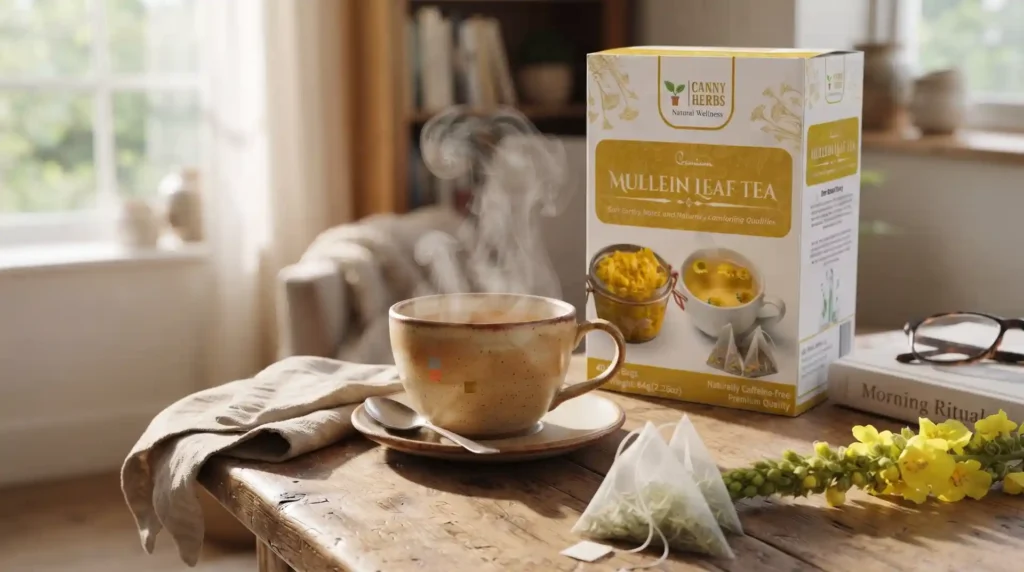
A basic brew works well for most people starting out. Steep one to two teaspoons of dried mullein leaf in hot water for ten to fifteen minutes, then strain it thoroughly before drinking, since the fine hairs settle more than you might expect.
Some people enjoy it as an evening ritual, sipping a warm cup while winding down for the night. Others blend it with peppermint or ginger, mainly for extra flavor and variety rather than any specific added effect. Either way, a fine-mesh strainer or a cloth filter makes the straining step far easier, especially if you brew mullein regularly rather than just once in a while.
A Closer Look at the Research
Mullein tea benefits. It helps to understand where the evidence genuinely stands today. Laboratory studies have identified compounds in mullein, including flavonoids, iridoids, and saponins, that show some anti-inflammatory activity in test-tube settings. That is a meaningfully different thing from proving an effect in a person drinking tea at home.
Health organizations that have reviewed mullein generally describe it as likely safe for most adults, with few reported side effects. At the same time, they consistently note that solid human research remains limited, and that mullein should never replace medical care for a persistent cough, breathing difficulty, or any other ongoing health concern. Pregnant or nursing individuals, in particular, should check with a doctor first, since safety data in that group is limited.
It is also worth noting that mullein seeds, unlike the leaves and flowers, contain a natural compound once used to stun fish. Because of this, traditional preparation has always relied specifically on the leaves and flowers, never the seeds, and that distinction matters if you ever forage mullein yourself rather than buying it pre-prepared from a trusted supplier.
Why Quality Still Matters
Mullein tea benefits. Not every batch of dried mullein performs the same way, even before you consider any of its traditional associations. Clean, well-dried leaves tend to produce a smoother, more pleasant cup. Leaves that were harvested or dried poorly often taste flat, or carry more of those irritating fine hairs into your final drink, no matter how carefully you strain it afterward.
Storage matters too. Keep dried mullein leaf in a sealed container, away from direct light and moisture. Stored properly, it stays fresh and pleasant to drink for many months.
Sourcing matters just as much as storage. Mullein grown in clean soil, away from roadside pollution, tends to produce a cleaner-tasting cup overall. Since mullein often grows wild along roadsides and disturbed land, knowing where your leaves came from genuinely affects both safety and flavor, more than many people realize at first.
A Tradition Worth Understanding Honestly
Mullein tea benefits offers a gentle, genuinely time-tested ritual, rooted in centuries of herbal tradition. Its long history across many cultures gives it real, lasting appeal in today’s wellness routines. At the same time, honesty about the evidence matters, especially given how much overstated content circulates online. Enjoy mullein tea for what it genuinely offers: a mild, pleasant herbal drink with deep historical roots, not a substitute for medical treatment.
If you want to experience this tradition yourself, explore Canny Herbs mullein tea and taste a piece of herbal history, brewed thoughtfully for today’s cup, one quiet afternoon at a time.